
How to Write an Office Manager Resume That Gets Interviews
Office managers are essential to keeping businesses organized, efficient, and successful. They oversee daily operations, support employees, manage processes, and often handle budgeting, bookkeeping, or other critical functions.
Because these positions require strong leadership and organization, your resume needs to show more than administrative experience. A strong office manager resume should highlight your ability to improve operations, solve problems, and deliver measurable results.
This guide explains what to include in an office manager resume, what employers look for, and how to showcase your skills and accomplishments in a way that stands out. You’ll also find office manager resume examples tailored to different industries.
With Quillbot’s Resume Design Templates, you can create a polished, eye-catching resume that highlights your leadership and impact.
Key takeaways
- An office manager resume should highlight leadership, operational expertise, measurable achievements, and relevant technical skills.
- Employers look for evidence that you can improve processes, support business goals, and manage critical office functions.
- A strong office manager resume uses accomplishment-focused bullet points, quantifiable results, and action verbs instead of simply listing responsibilities.
- Tailoring your resume to the industry—such as healthcare or service-based businesses—helps demonstrate your fit for the role.
Continue reading: How to Write an Office Manager Resume That Gets Interviews
Football Background | Free to Download Images
Download the free football background images below or create your own using Quillbot’s free AI Image Generator.
The prompts used to create the images below—in Quillbot’s AI Image Generator—are shown next to the images so you can adapt them to make the perfect football background for your project, phone, or computer.

Continue reading: Football Background | Free to Download Images
How to Write an Executive Assistant Resume That Gets Noticed
Executive assistant positions are some of the most sought-after administrative roles—and some of the most competitive.
Executive assistants often serve as strategic partners to CEOs and other high-level leaders. They manage calendars, coordinate projects, handle confidential information, and help executives stay focused on their highest priorities. Your resume needs to show that you can handle those challenges with poise and precision.
This guide explains what to include on an executive assistant resume, what makes you a top candidate, and how to demonstrate that you’re capable of supporting senior leadership. The resume examples at the end show how to tailor your experience for different executive support environments.
With Quillbot’s Resume Design Templates, you can create a polished resume that showcases your organizational skills, leadership support experience, and business impact.
Key takeaways
- An executive assistant resume should include contact information, a professional summary, skills, work experience, and education.
- Employers look for evidence of executive support, calendar management, project coordination, discretion, and business impact.
- Strategic keyword usage helps your resume pass ATS screenings while remaining readable to recruiters.
- Reviewing examples of effective executive assistant resumes helps you improve your resume’s structure, content, and overall effectiveness.
Continue reading: How to Write an Executive Assistant Resume That Gets Noticed
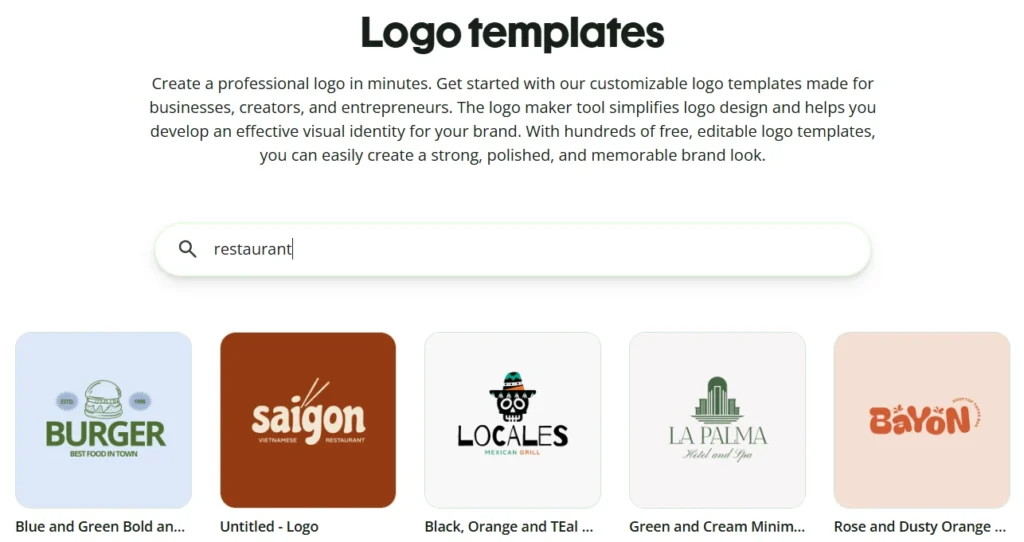
Restaurant Logo Ideas | Tips & Examples
Creating a logo that instantly captures the vibe of your restaurant and leaves a lasting impression starts with the right ideas.
Read on for tips on how to come up with restaurant logo ideas, whether you’re briefing a designer or bringing the concept to life yourself.
Instead of starting from scratch, why not use a free tool like Quillbot’s online logo templates to create your restaurant logo?
Continue reading: Restaurant Logo Ideas | Tips & Examples
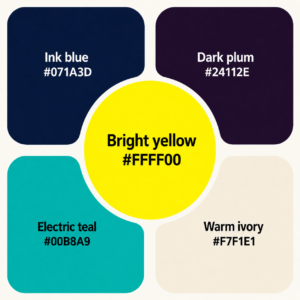
Bright Yellow Color Meaning | Connotations & Hex
Shades of yellow described as bright yellow have very high saturation, meaning the color looks pure, vivid, and intense rather than shifted toward gray or softened into a pale tint.
To make bright yellow look even more vivid, pair it with dark, muted, or neutral colors and use it as a focused accent rather than surrounding it with other highly saturated hues.
You can extract the color codes from an image with a bright yellow color scheme using Quillbot’s free Color Palette Generator tool.
Key takeaways
- Bright yellow is a highly saturated, vivid color that feels energetic, optimistic, and attention-grabbing.
- In branding, bright yellow can help logos, packaging, and campaign visuals feel bold, cheerful, urgent, and easy to notice.
- For maximum impact, pair bright yellow with dark, muted, or neutral colors.
Continue reading: Bright Yellow Color Meaning | Connotations & Hex
Free Online Thank You Card Templates | How to Guide
From consultants and tutors to event planners, real estate agents, and market sellers, business builders need a range of promotional cards to help them connect with clients and customers in their local communities.
Read on to find out how you can use thank you card templates in an online tool like Quillbot’s free card templates to create branded designs that leave a lasting impression.
Continue reading: Free Online Thank You Card Templates | How to Guide
Business Analyst Resume | Examples & Tips
Business analyst (BA) roles can look very different from one company to another. Some focus on data analysis and reporting, while others center on operations, compliance, systems implementation, or digital transformation.
Because of this, there’s no single “perfect” business analyst resume. Recruiters still expect a core set of analytical, communication, and problem-solving skills, but the right keywords, tools, and experience depend heavily on the role itself.
This guide explains what to include in a business analyst resume, what recruiters actually want to see, and how to tailor your resume for Applicant Tracking Systems (ATS) screenings and different business analyst specializations. The resume examples at the end show how these strategies work in practice.
Key takeaways
- Business analyst roles vary widely depending on the industry and organization, so there is no single perfect resume.
- Tailor your resume to the role. Use keywords, tools, and terminology that match the job description and business analyst specialization.
- Focus on business impact, not responsibilities alone. Strong resumes show measurable outcomes such as cost savings, efficiency gains, or successful project delivery.
- Entry-level resumes should emphasize transferable skills and project work, while senior resumes should highlight complex initiatives, stakeholder management, and measurable delivery.
Continue reading: Business Analyst Resume | Examples & Tips
75+ Behavioral Interview Questions | Example Answers
Behavioral interview questions ask you to describe how you handled a specific work situation in the past. They often start with a phrase like “Tell me about a time …” and are sometimes called STAR interview questions or competency-based interview questions.
When interviewers ask behavioral-based interview questions, they’re typically looking for evidence of your soft skills, such as how you communicate, approach challenges, prioritize tasks, and collaborate with others.
This article includes example behavioral interview questions and answers, as well as tips on how to prepare for them and a list of common mistakes.
QuillBot’s free AI Chat can help you prepare for interviews by identifying relevant stories from your work experience that you can use to answer behavioral questions.
Key takeaways
- Behavioral interview questions are designed to uncover how you’ve handled real workplace situations, especially around soft skills like communication, teamwork, problem-solving, leadership, and adaptability.
- Strong answers use a clear structure like STAR or CAR to explain the situation, your specific actions, and the result without adding too much background.
- You don’t need to memorize dozens of answers. Preparing around five flexible work stories can help you respond confidently to a wide range of behavioral questions.
- The best responses show evidence of your skills instead of simply describing them, so focus on concrete examples, positive outcomes, and what you learned.
Continue reading: 75+ Behavioral Interview Questions | Example Answers
Color Match Game
Recreate the target color by mixing virtual paint. Click the paint circles and try to get the closest match possible.
Target Color
Your Mix
How to Play
- Choose a difficulty level.
- Look at the target color.
- Click paint circles to add paint.
- Watch your match percentage increase.
- Try to reach 100% and start a new round.
Continue reading: Color Match Game
Lilac Color Meaning | Connotations & Hex Codes
If pale pink feels a bit too sugary and lavender’s a little too cool or subdued, lilac could be the color with the personality you’re looking for.
With just the faintest dash of red coming through in its rosy undertone, lilac is one of the warmer, more characterful shades of pale purple.
You can extract the color codes from an image with a lilac color scheme you like using Quillbot’s free online Color Palette Generator.
Put your design instincts to the test with our color matching game.

Key takeaways
- Lilac is a pale, pink-leaning purple that feels warmer and more expressive than lavender, making it a soft but characterful color choice.
- The color often symbolizes romance, creativity, calm, nostalgia, and springtime, which makes it especially useful for gentle, elegant, or dreamy design styles.
- Lilac works well in branding for categories like skincare, wellness, florals, stationery, and lifestyle goods as well as in interiors for bedrooms, nurseries, bathrooms, and relaxing spaces.
- Pair lilac with colors like soft apricot, blush pink, mauve, plum gray, ivory, or cream to create palettes that feel imaginative, refined, romantic, or soothing.
Continue reading: Lilac Color Meaning | Connotations & Hex Codes
Do it all with Quillbot
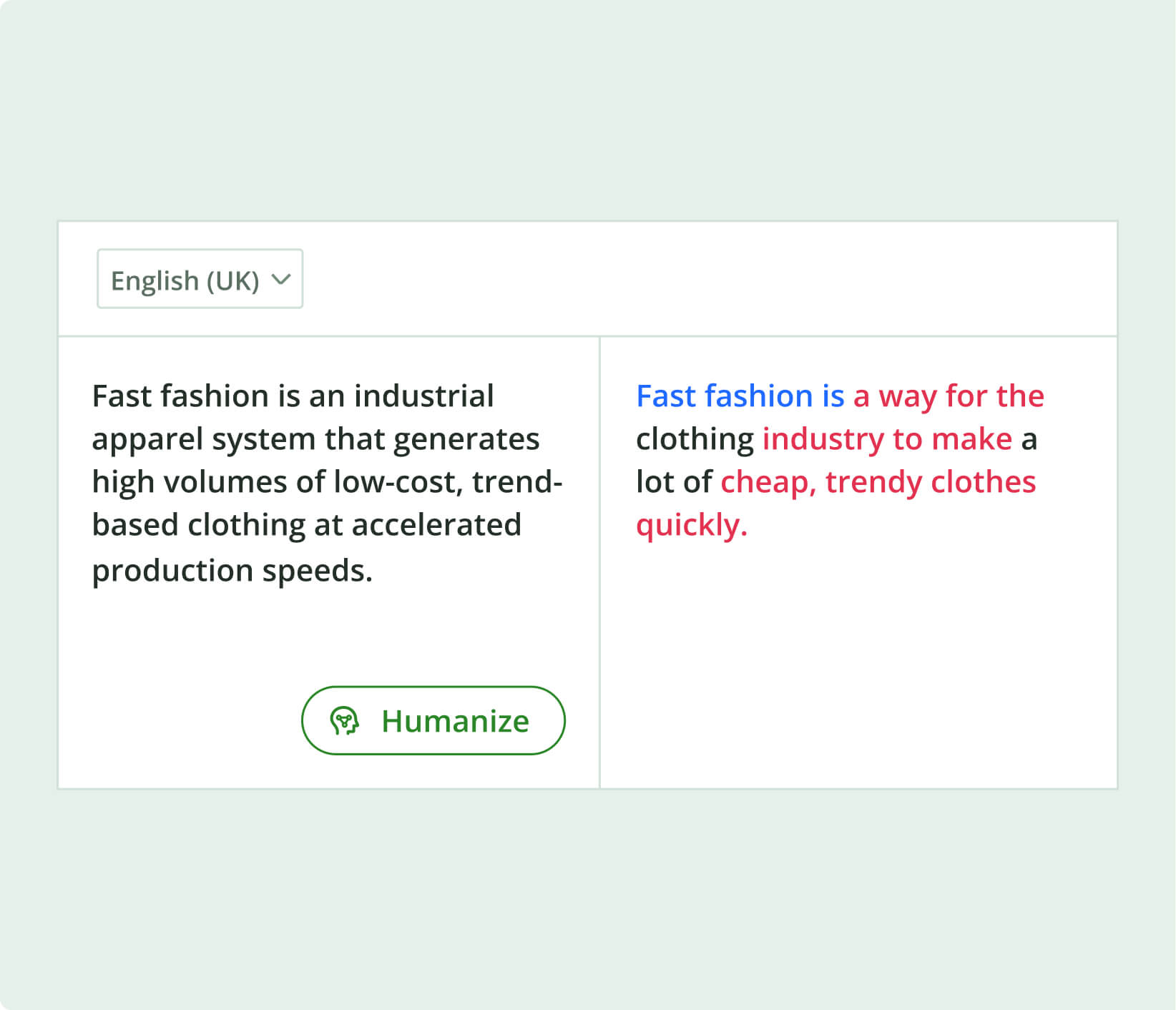
Natural is the new smart
Quillbot’s free AI Humanizer helps you create engaging, natural-sounding copy. It smooths awkward phrasing and removes common AI giveaways, so every draft sounds more like you. After all, natural writing is in.
Humanize nowNatural is the new smart
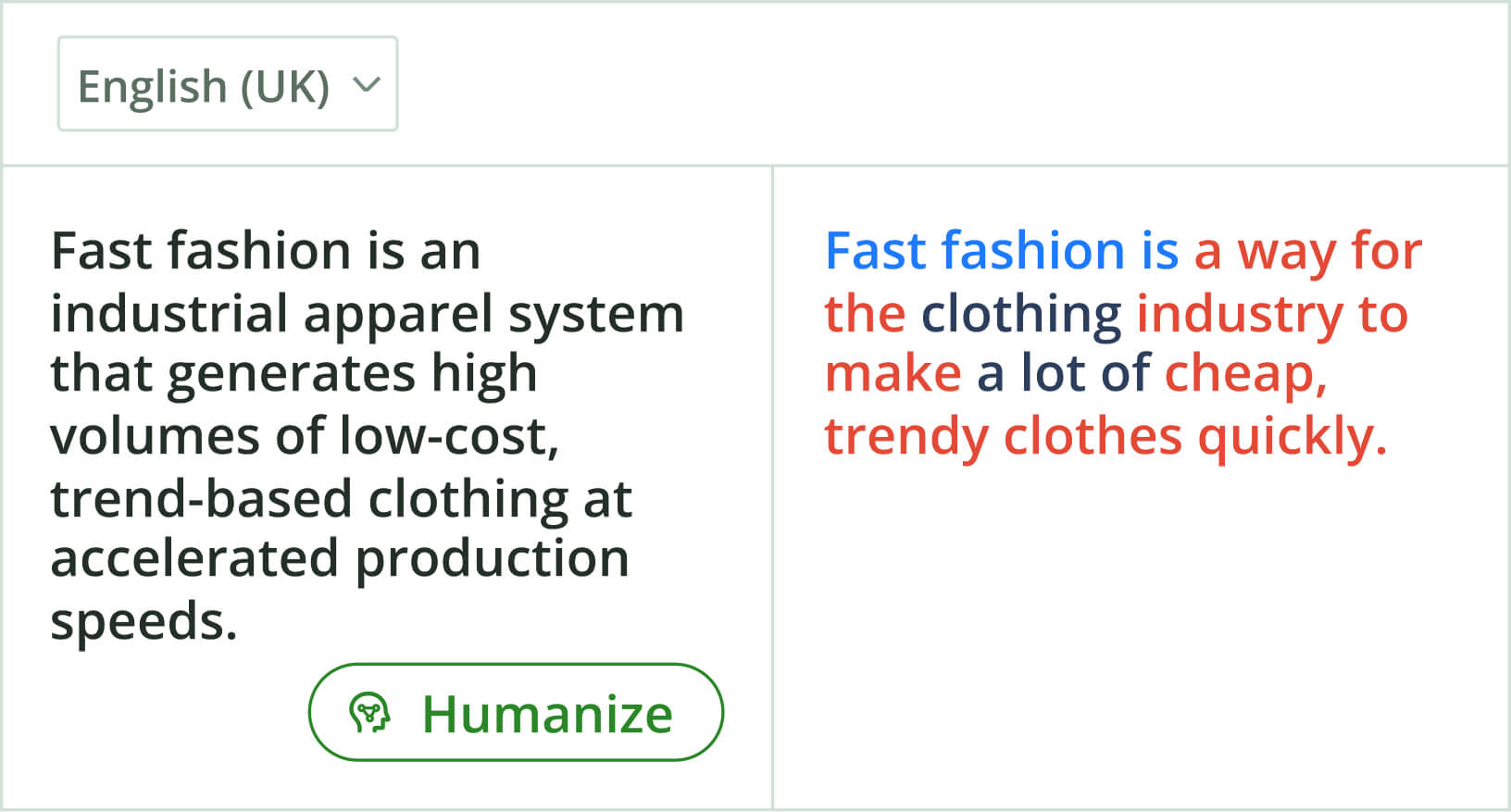
Quillbot’s free AI Humanizer helps you create engaging, natural-sounding copy. It smooths awkward phrasing and removes common AI giveaways, so every draft sounds more like you. After all, natural writing is in.
 Humanize now